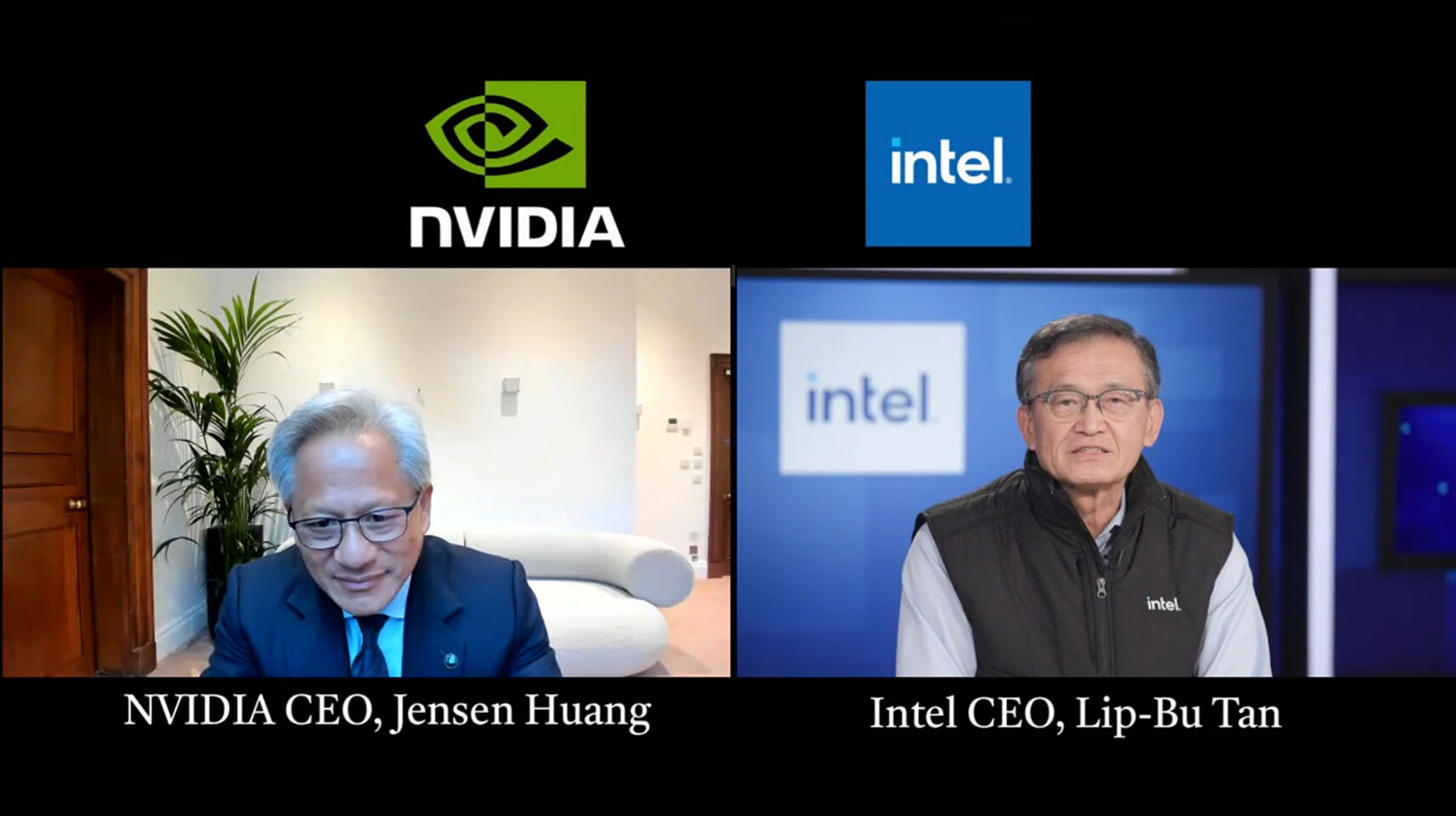
NVIDIA and Intel Forge Groundbreaking Partnership to Revolutionize AI Hardware
NVIDIA’s unexpected $5 billion investment in Intel has unveiled a major shift in the landscape of AI and data center hardware. The two tech giants have been collaborating discreetly for nearly a year, working on integrating Intel’s x86 CPUs with NVIDIA’s RTX and data center GPUs using NVLink technology. This partnership aims to deliver true system-on-chip (SoC) designs that could finally overcome the longstanding PCIe bottleneck limiting AI server performance.
Direct Integration: Breaking the PCIe Bottleneck
Traditionally, AI servers have relied on PCIe connections to link CPUs and GPUs, resulting in bandwidth limitations, increased latency, and complex memory management. By embedding NVIDIA’s NVLink directly into Intel’s x86 silicon, these new hybrid chips enable direct communication between CPU and GPU, along with shared memory pools. This architecture promises significant improvements in data throughput and efficiency for demanding AI workloads.
This approach mirrors NVIDIA’s strategy with its Vera processors, which combine Arm cores with Blackwell GPUs. The key difference now is the use of Intel’s widely adopted x86 architecture, opening the door to broader compatibility and adoption across the industry.
Expanding Beyond Data Centers
While the initial focus is on machine learning clusters and high-performance computing (HPC) installations—environments where PCIe bandwidth is already a critical constraint—Intel has indicated that these innovations could extend to both server and client applications. This suggests that, in the future, gaming laptops and professional workstations may also benefit from this advanced CPU-GPU integration.
Industry Implications and Manufacturing Questions
This collaboration poses a significant challenge to competitors like AMD, which has been developing its own CPU-GPU integration solutions. The combined expertise of Intel and NVIDIA could potentially leapfrog existing efforts, setting a new standard for AI and HPC hardware.
However, questions remain about the manufacturing process. When asked about the use of Intel’s fabrication facilities, Intel’s leadership offered only that they are focused on “perfecting the process.” Industry observers expect that TSMC will continue to manufacture these advanced chips for both companies in the near term. According to NVIDIA, the initial rollout will involve purchasing CPU chiplets and integrating them with GPU chiplets to create unified, high-performance solutions.
The NVIDIA-Intel partnership marks a pivotal moment for AI infrastructure, promising to deliver faster, more efficient systems that can meet the growing demands of modern workloads. As the collaboration progresses, the industry will be watching closely to see how this new era of CPU-GPU integration unfolds.