Intel Core Ultra 200-Series vs. AMD Ryzen 9000 Series: A Detailed Performance Comparison
Intel has recently shared an in-depth performance update for its Core Ultra 200-series "Arrow Lake-S" desktop processors, directly comparing them to AMD’s latest Ryzen 9000 series, including the high-performance 9000X3D models equipped with 3D V-Cache technology. This update, presented to channel partners and end-users, highlights Intel’s focus on delivering a balanced blend of gaming and productivity performance at competitive price points. The performance data reflects nearly a year of platform maturity, incorporating the latest software and microcode enhancements, especially improvements to Intel’s Application Performance Optimization (APO) software.
Lineup Overview and Competitive Positioning
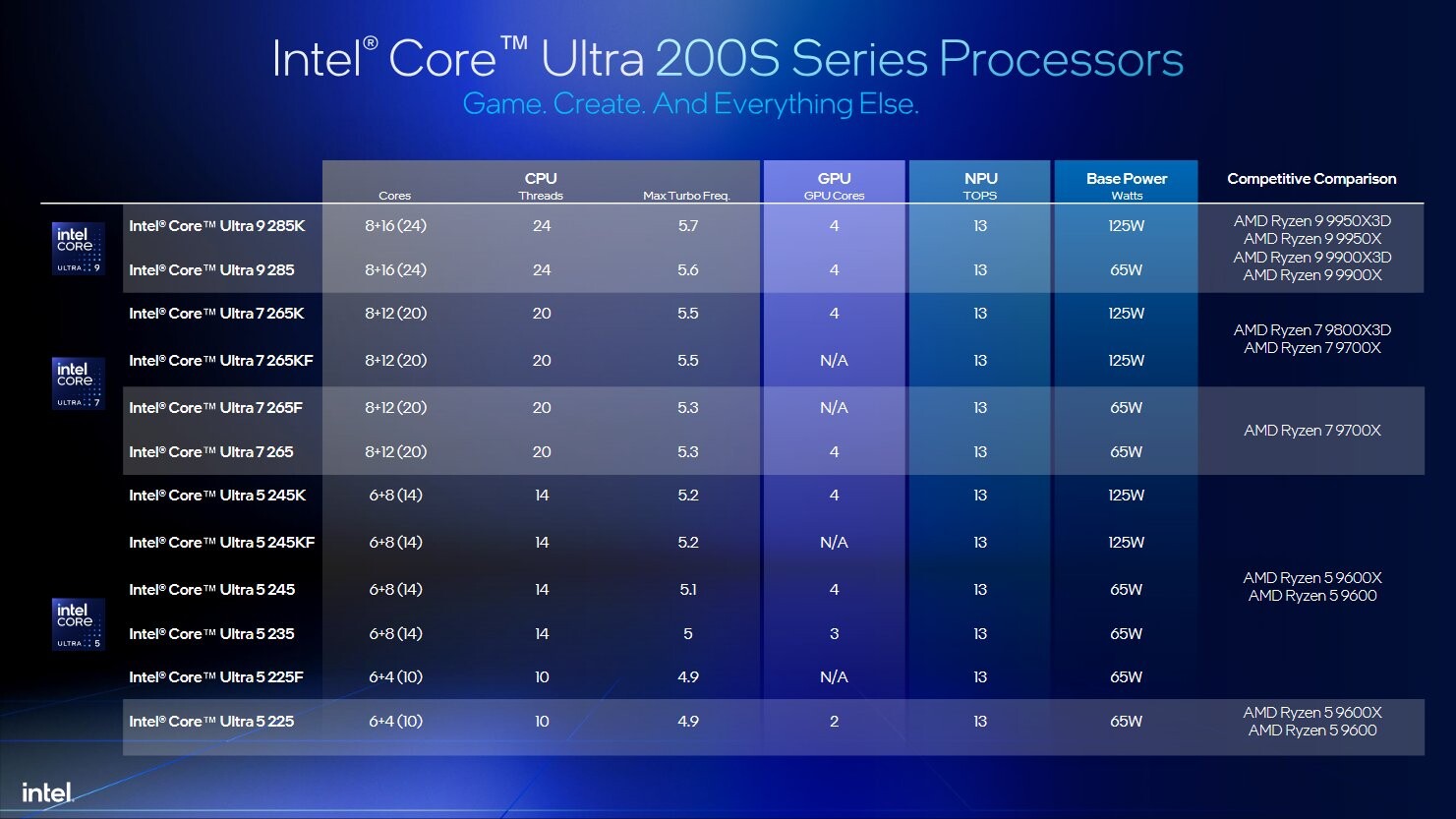
Intel’s presentation begins by outlining the full Socket LGA1851 desktop processor lineup. At the top end, the Core Ultra 9 8P+16E processors are positioned to compete directly with AMD’s Ryzen 9 9000 series, which feature high core counts. The Core Ultra 7 265K/KF (8P+12E) is compared to the Ryzen 7 9800X3D, widely recognized as a leading processor for PC gaming. The non-K variants, Core Ultra 7 265 and 265F, are matched against the Ryzen 7 9700X. Meanwhile, the Core Ultra 5 series, with configurations of 6P+8E and 6P+4E, is set against the Ryzen 5 9600X and 9600.
Flagship Showdown: Core Ultra 9 285K vs. Ryzen 9 9950X3D
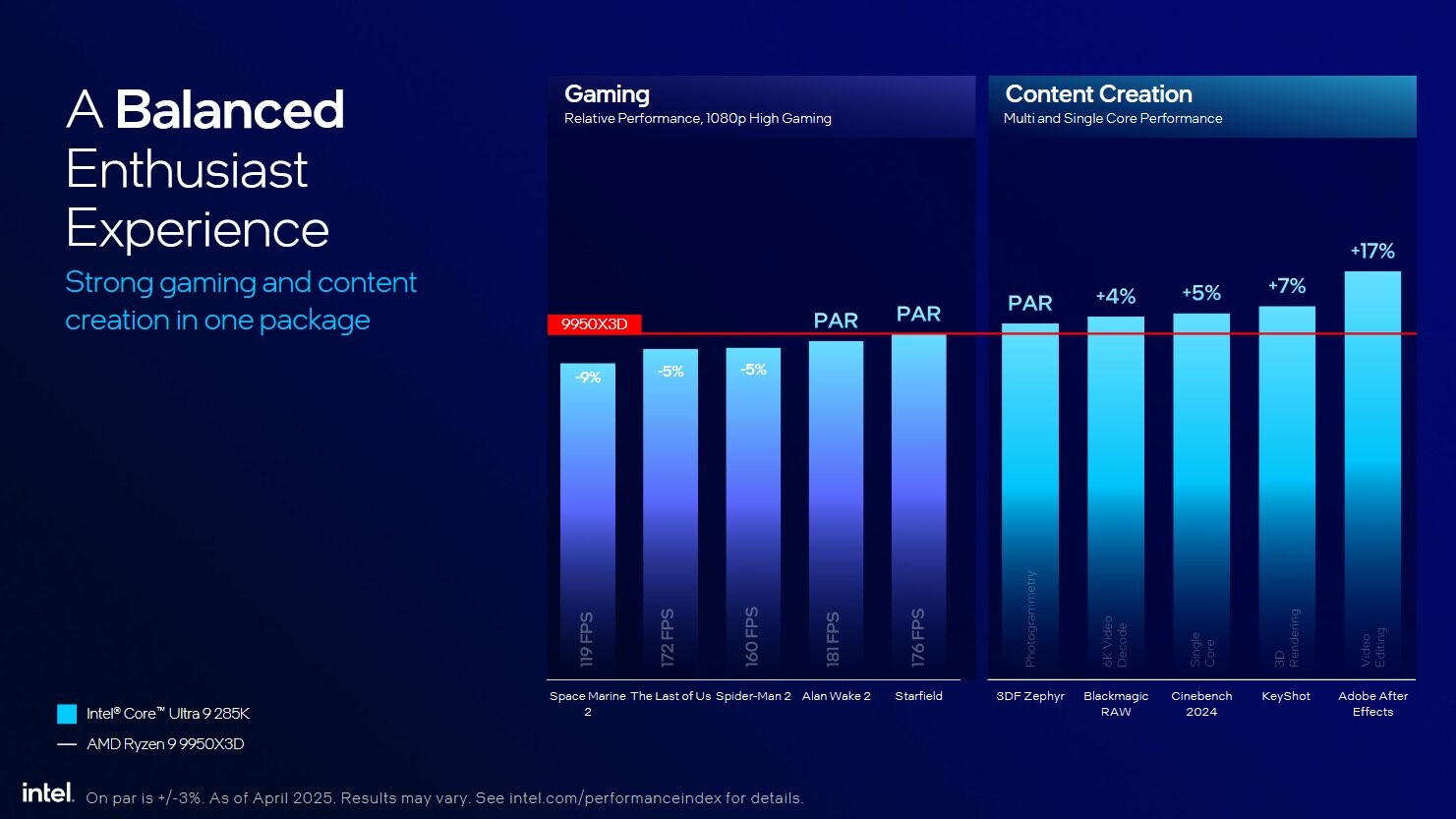
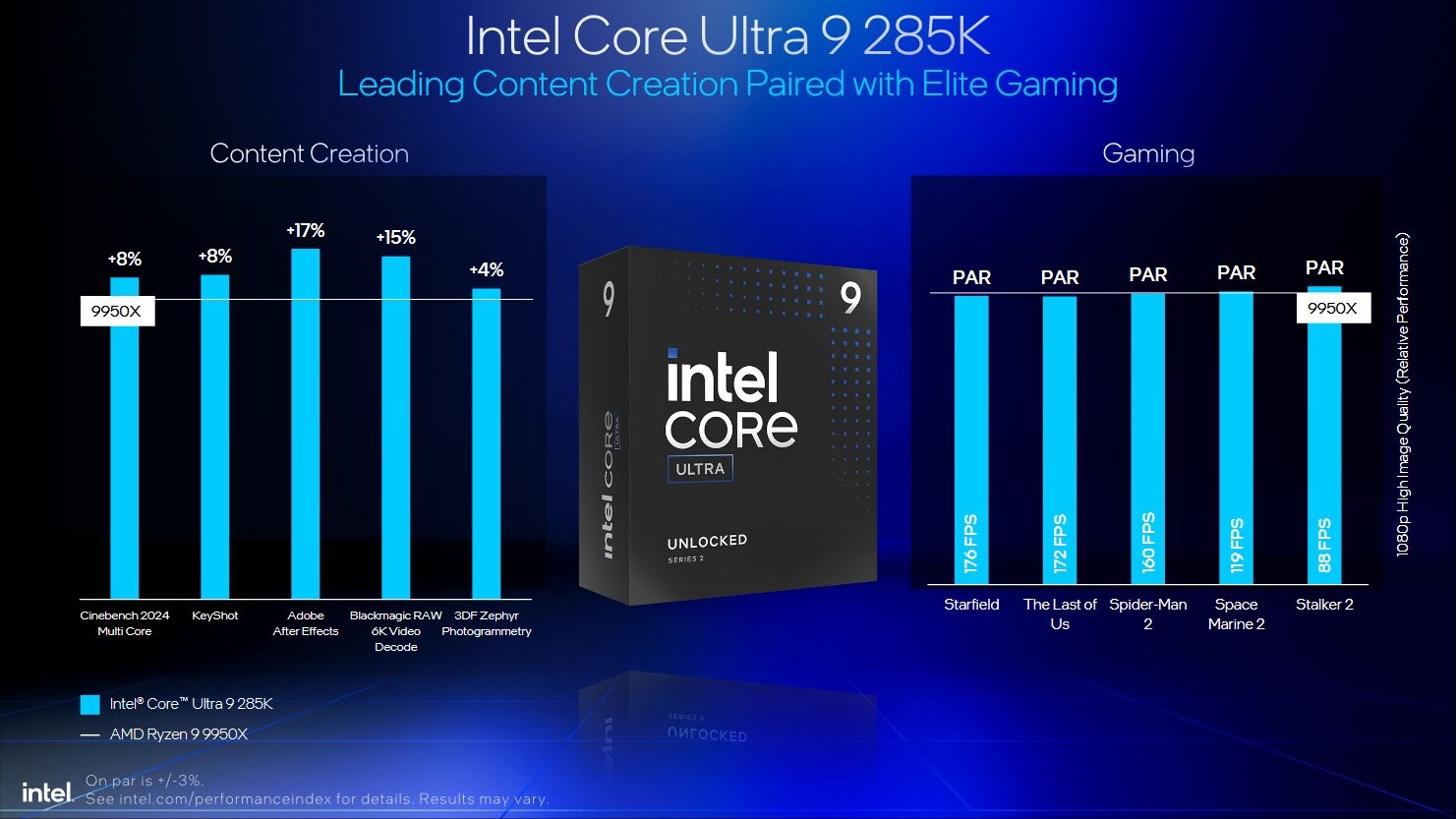
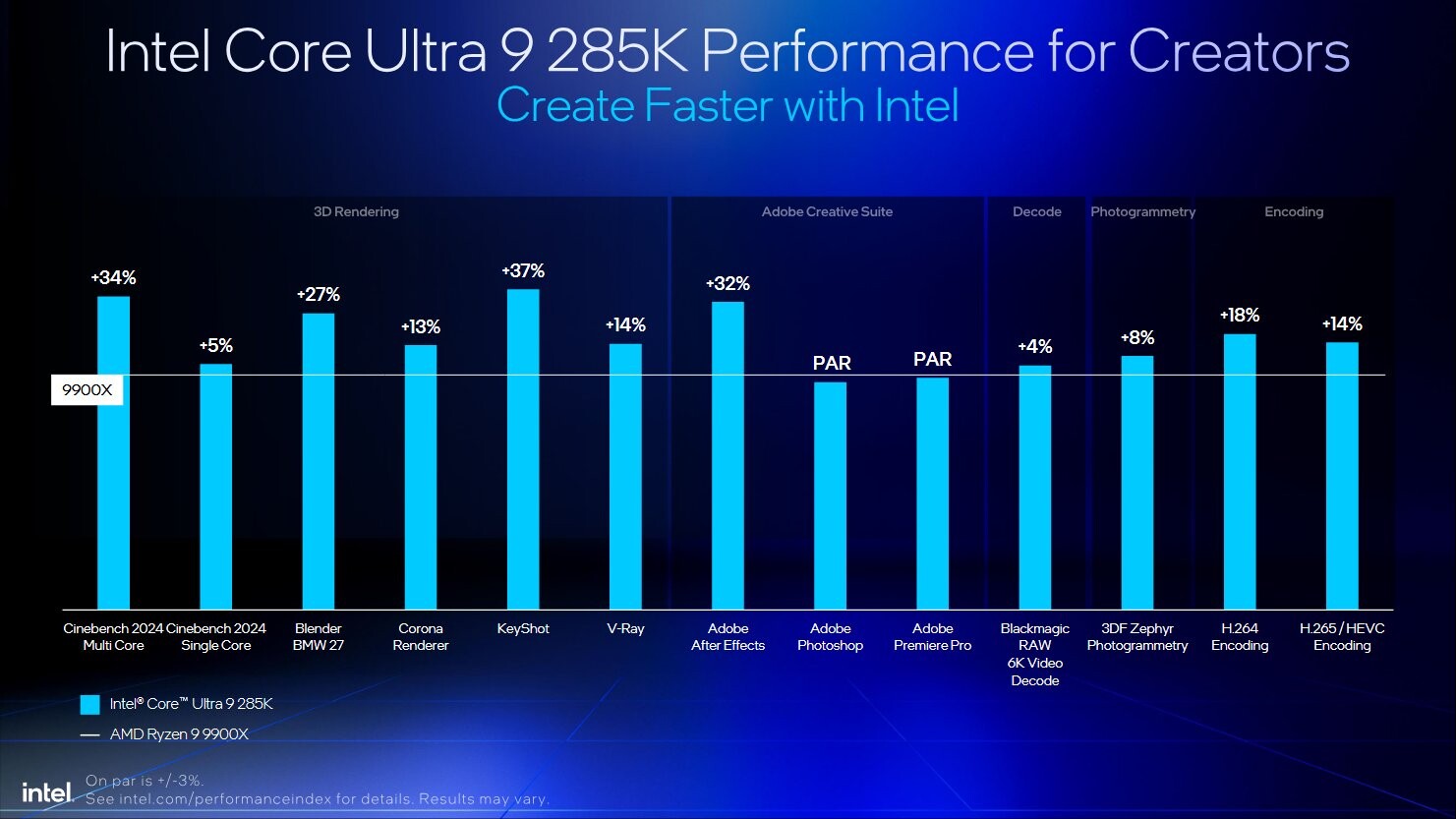
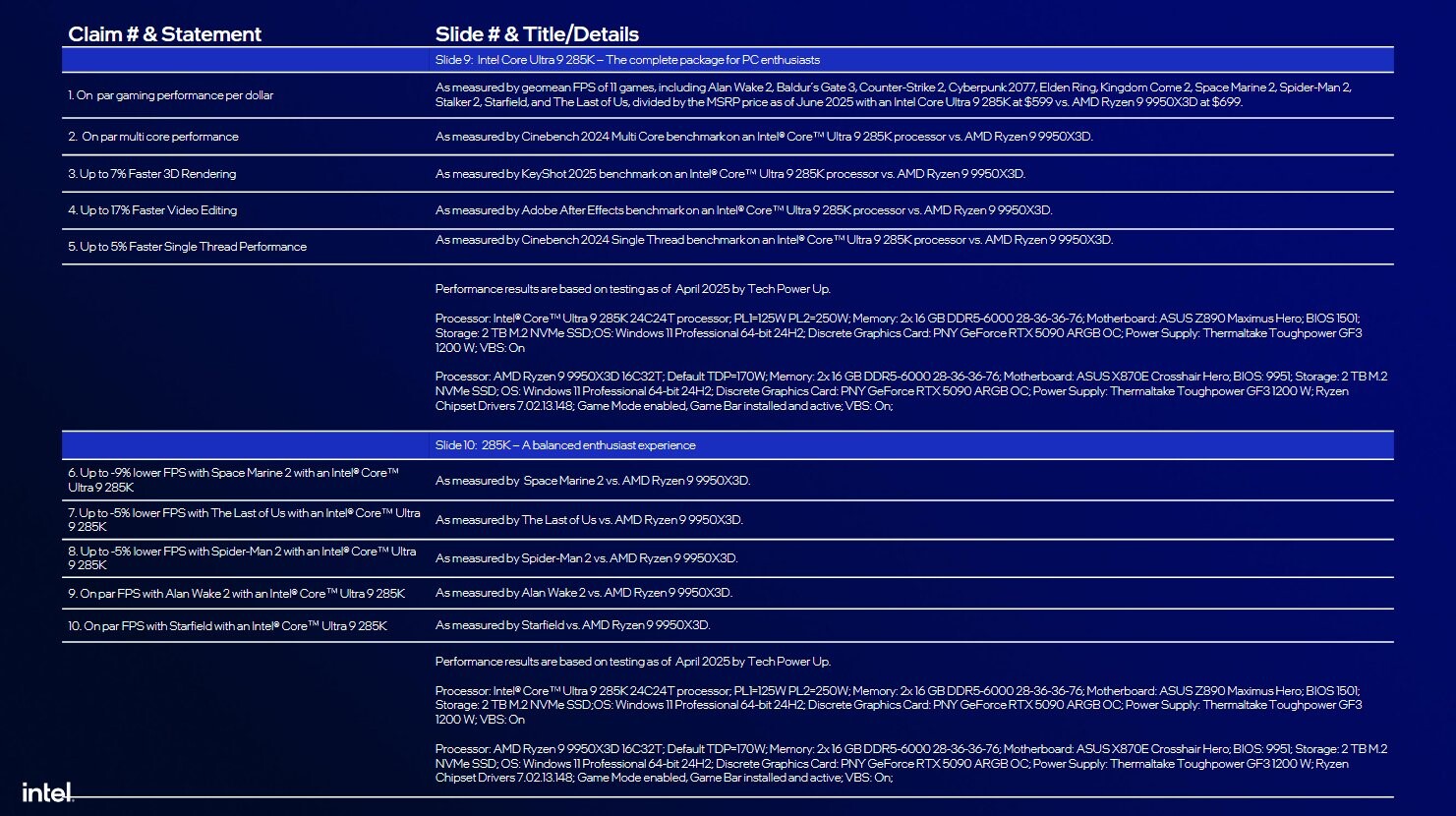
The flagship Core Ultra 9 285K is directly compared to AMD’s top-tier Ryzen 9 9950X3D. In gaming benchmarks, the 285K trails by only single-digit percentages, while in content creation and productivity workloads, it outperforms the 9950X3D in four out of five tests. When compared to the Ryzen 9 9950X (the non-X3D variant), gaming performance is largely on par, but the 285K leads in all five productivity benchmarks. A broader selection of games shows the 285K either matching or surpassing the 9950X in three out of nine titles, while a comprehensive suite of productivity tests consistently favors the 285K.
Core Ultra 7 265K: Gaming and Productivity Value
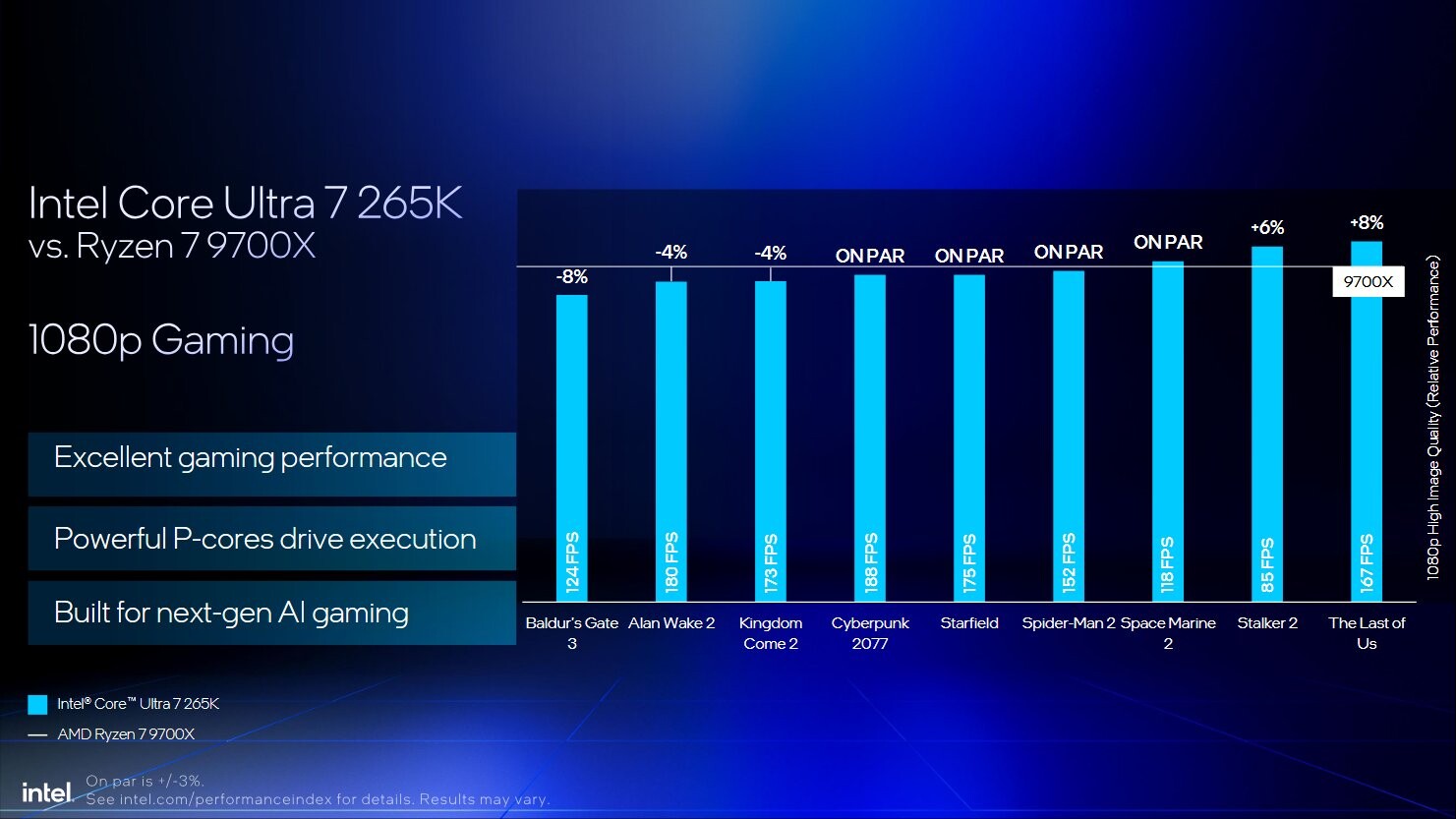
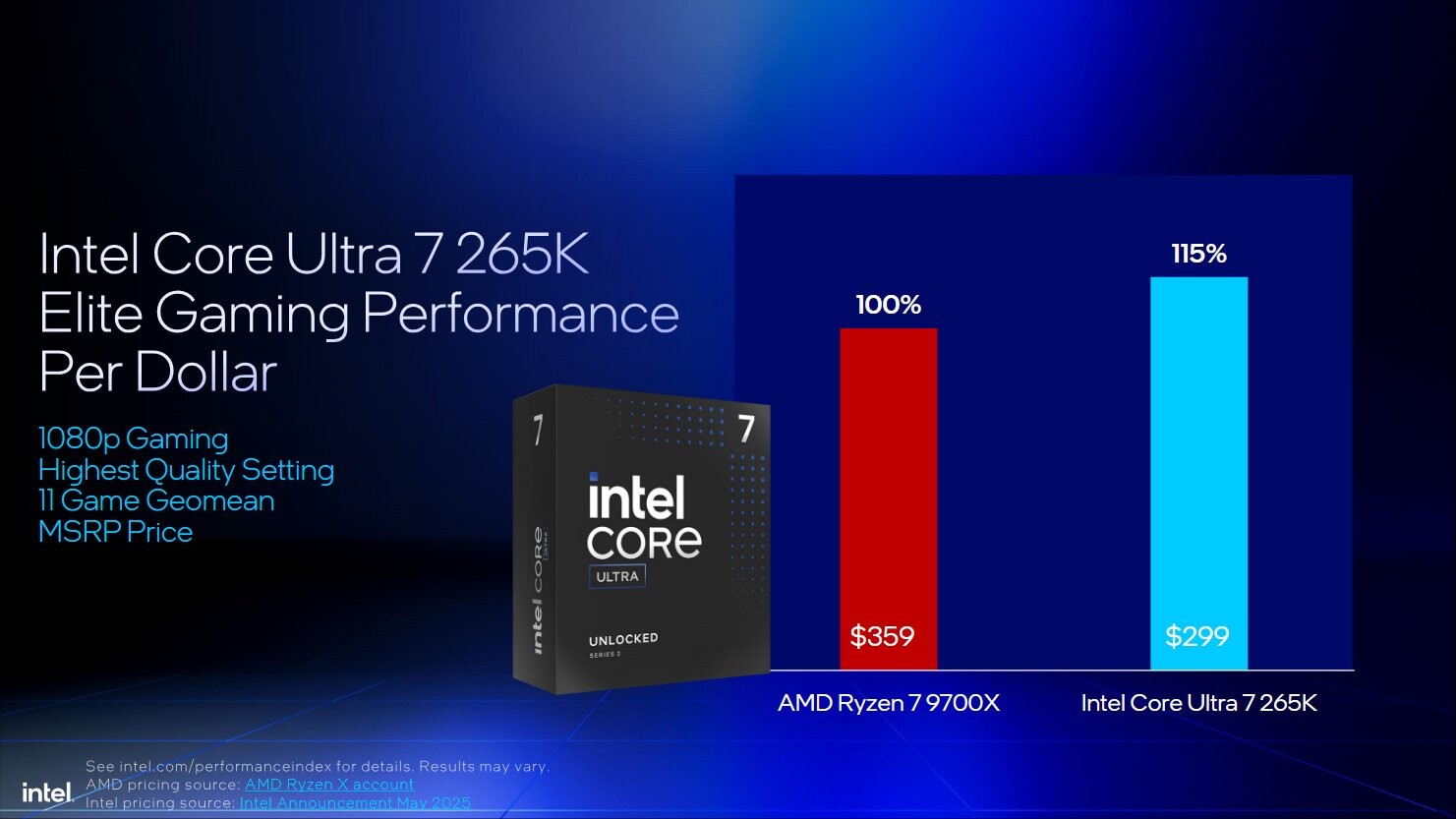
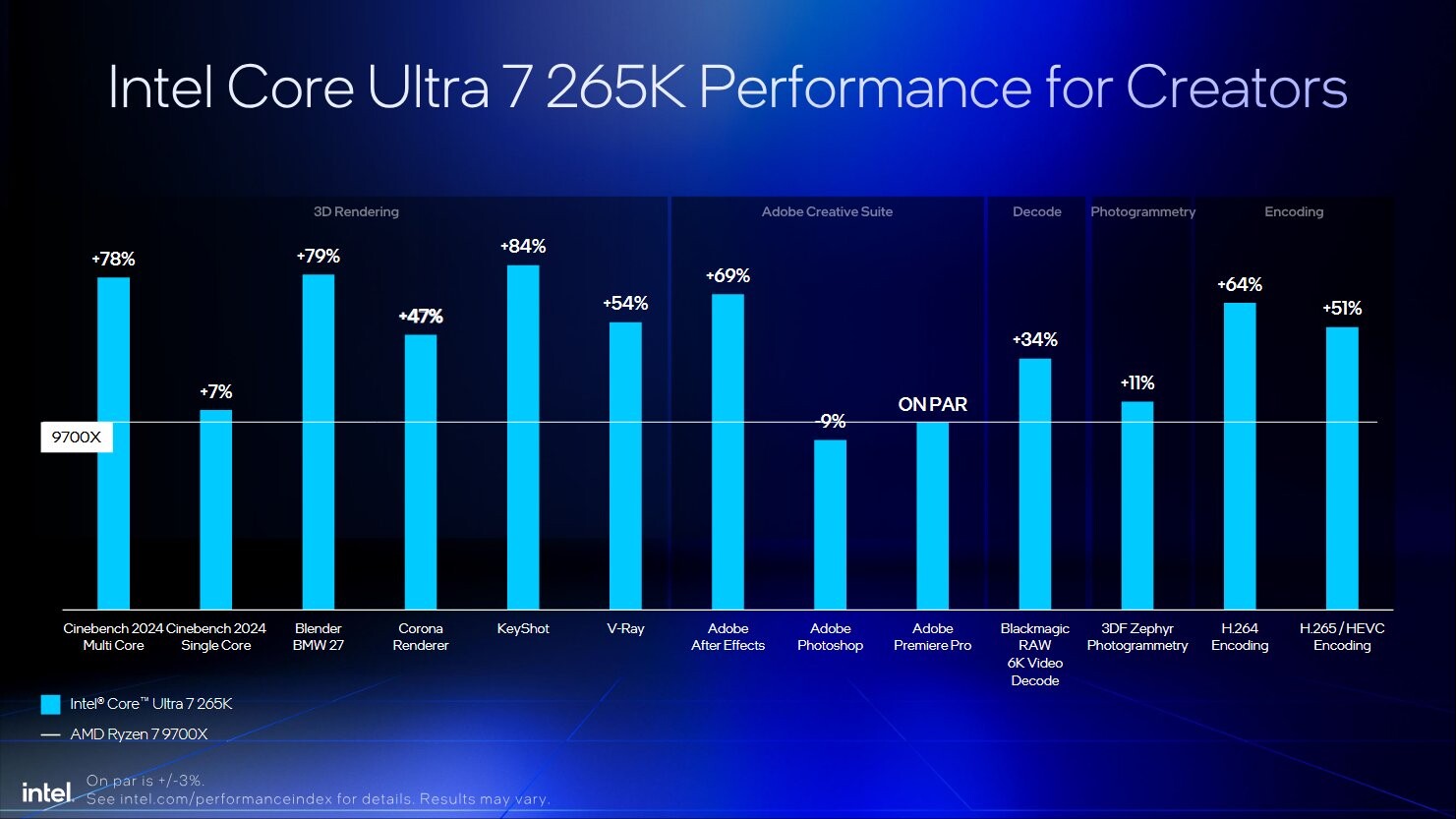
The Core Ultra 7 265K is compared to the Ryzen 7 9700X across a wide range of games. In these tests, the 265K matches or slightly lags behind the 9700X in seven out of nine games, but posts gains in two. With a current price of $299, the 265K offers a cost advantage over the $360 Ryzen 7 9700X. Thanks to its 8P+12E core configuration, including high-efficiency "Skymont" E-cores, the 265K delivers up to 84% higher performance in multithreaded productivity benchmarks.
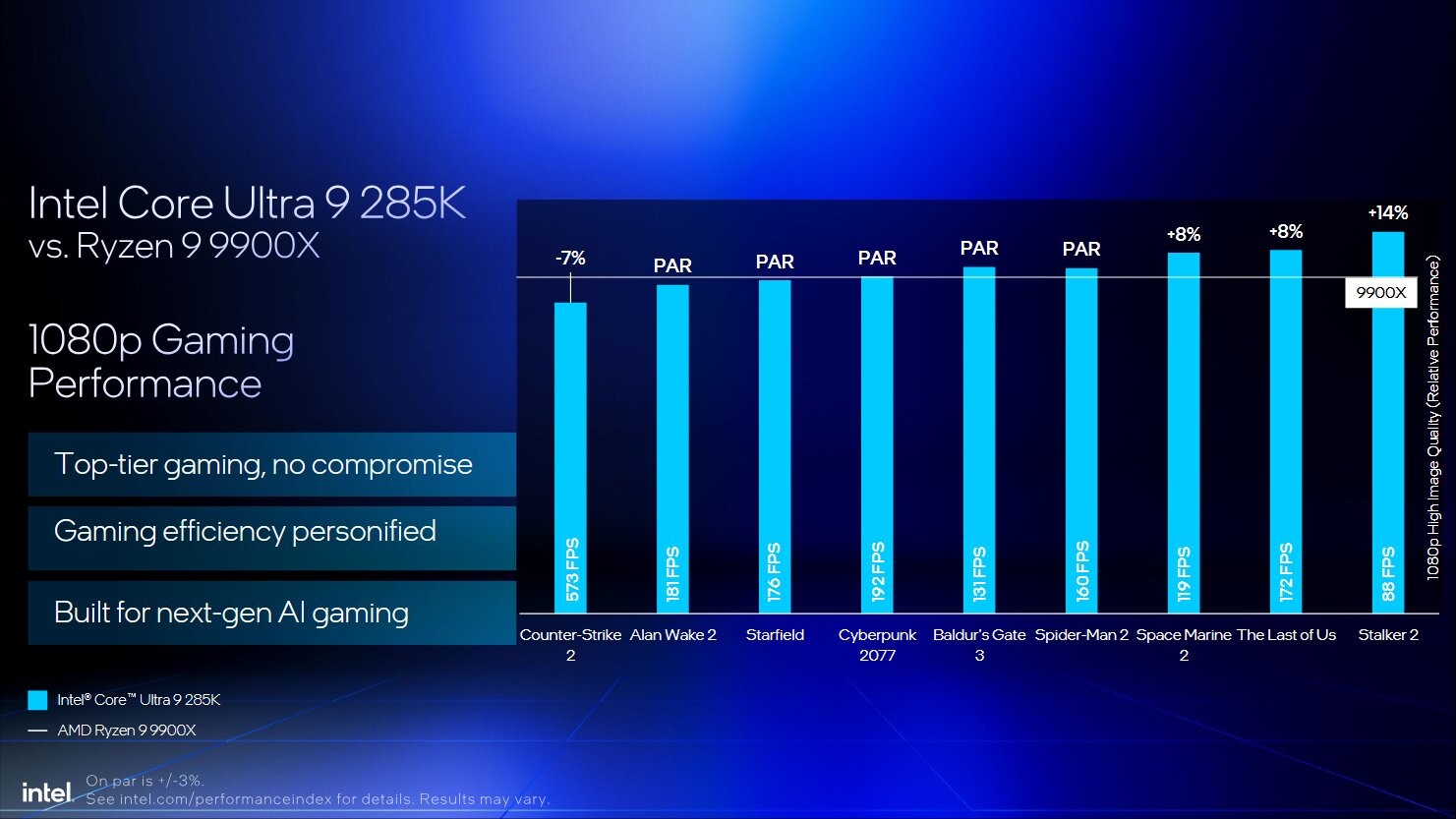
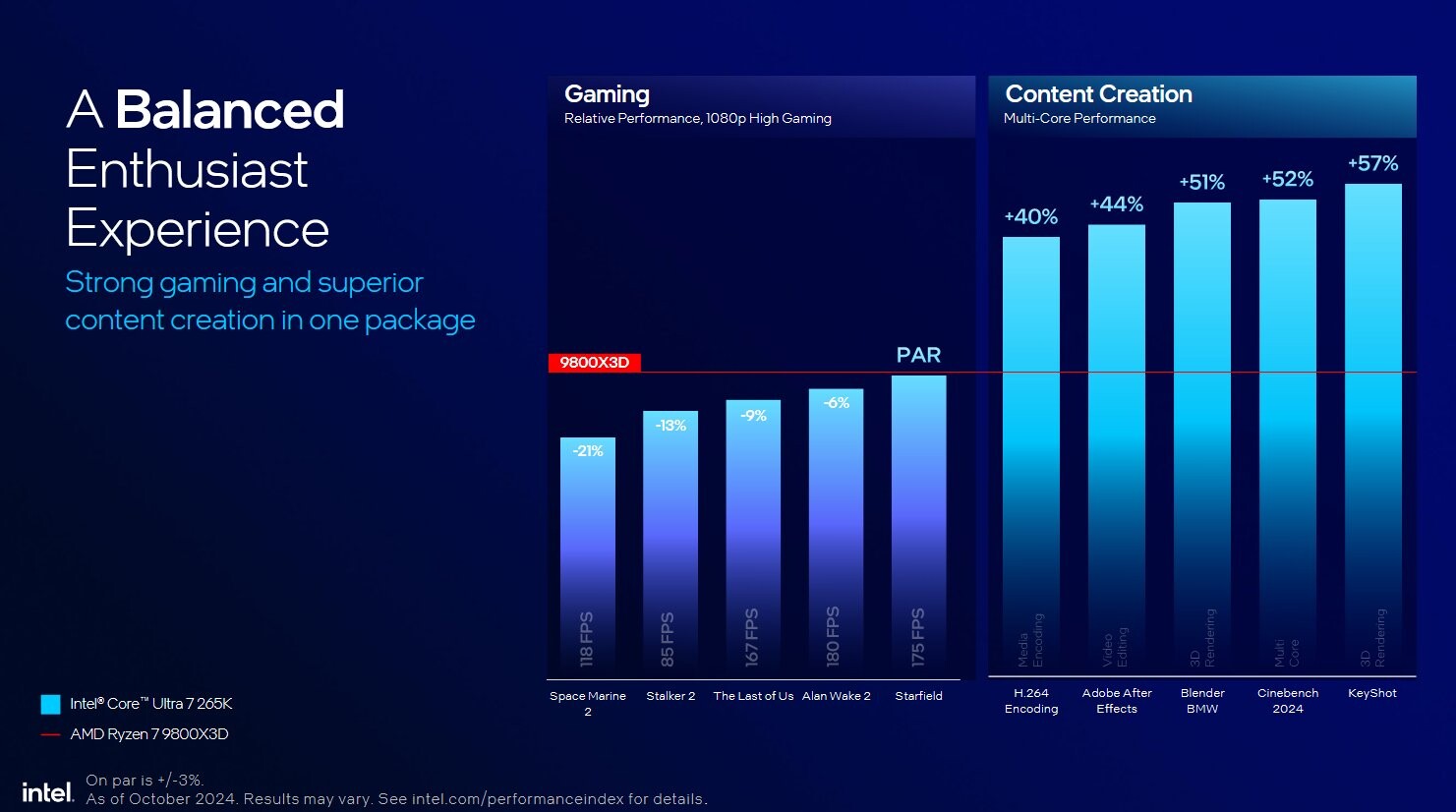
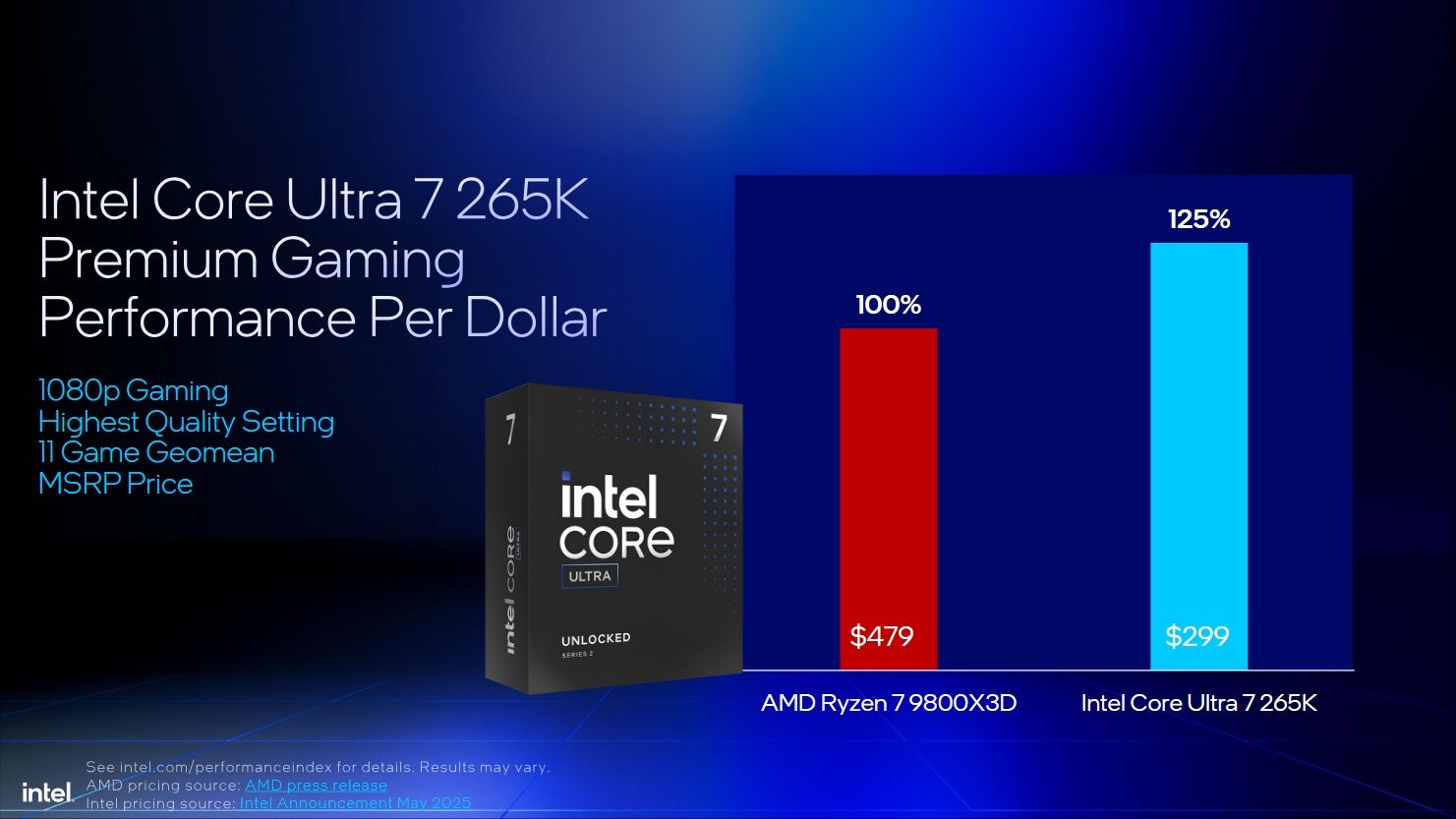
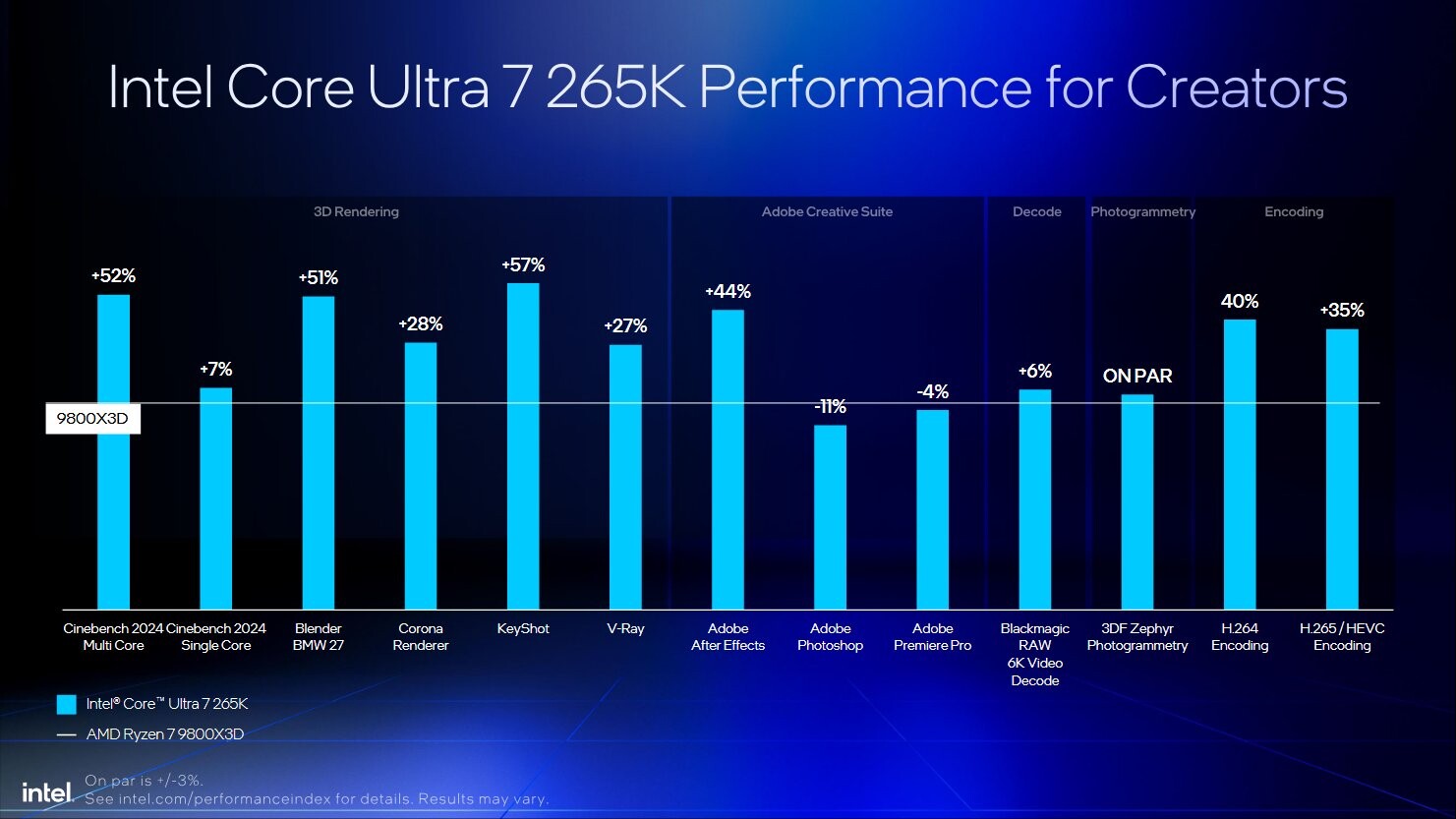
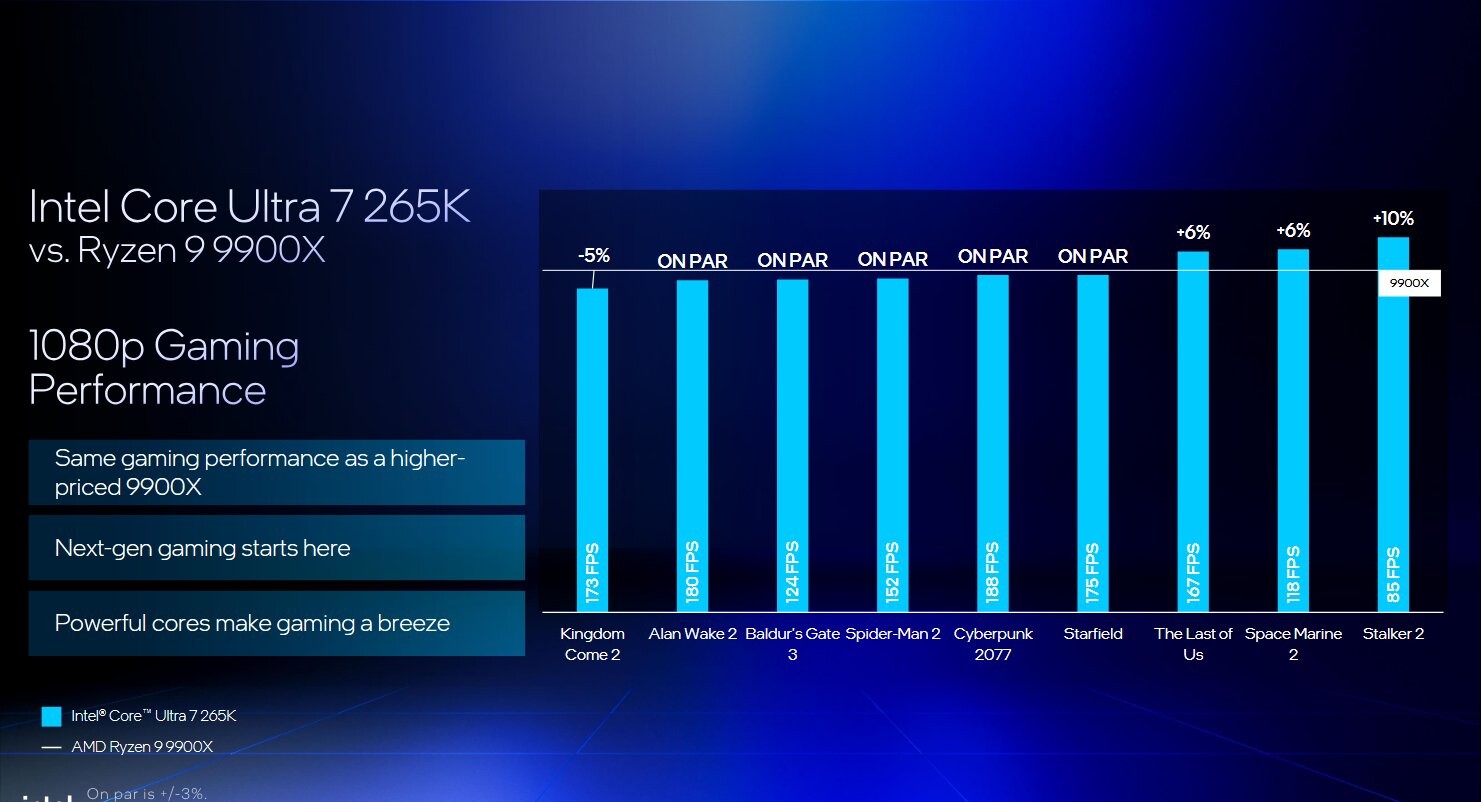
When pitted against the Ryzen 7 9800X3D in a smaller set of gaming tests, the 9800X3D dominates in four out of five titles, with "Starfield" being the only exception where the 265K matches performance. However, the 265K’s higher core count translates to significantly better productivity results. Intel also highlights a performance-per-dollar comparison, claiming a 25% advantage for the $299 Core Ultra 7 265K over the $479 Ryzen 7 9800X3D, particularly in productivity workloads. Additionally, the 265K is compared to the Ryzen 9 9900X (12-core/24-thread, non-X3D), where gaming performance is largely equivalent, though productivity comparisons were not detailed.
Core Ultra 5 Series: Balanced Performance for Mainstream Users
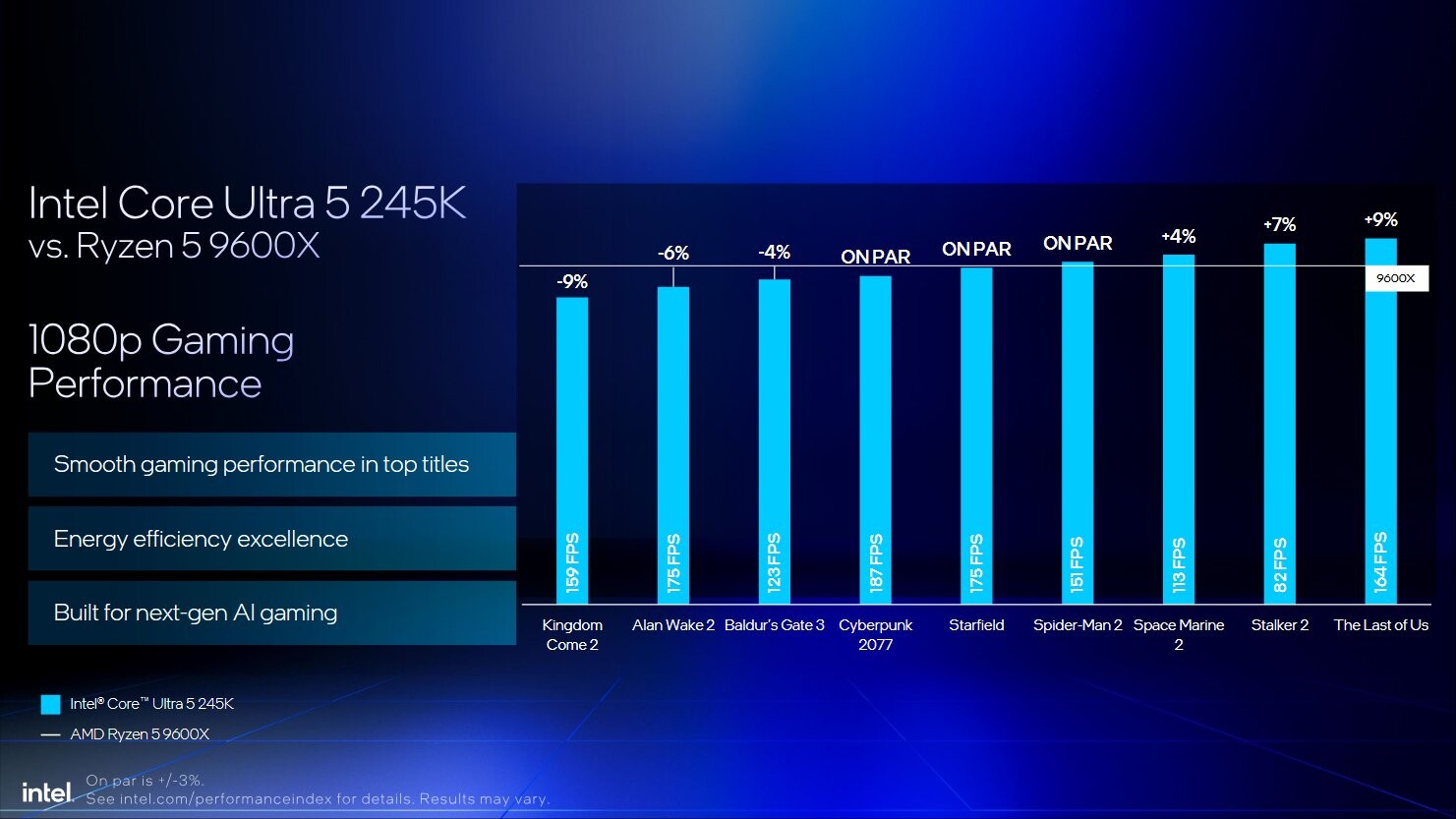
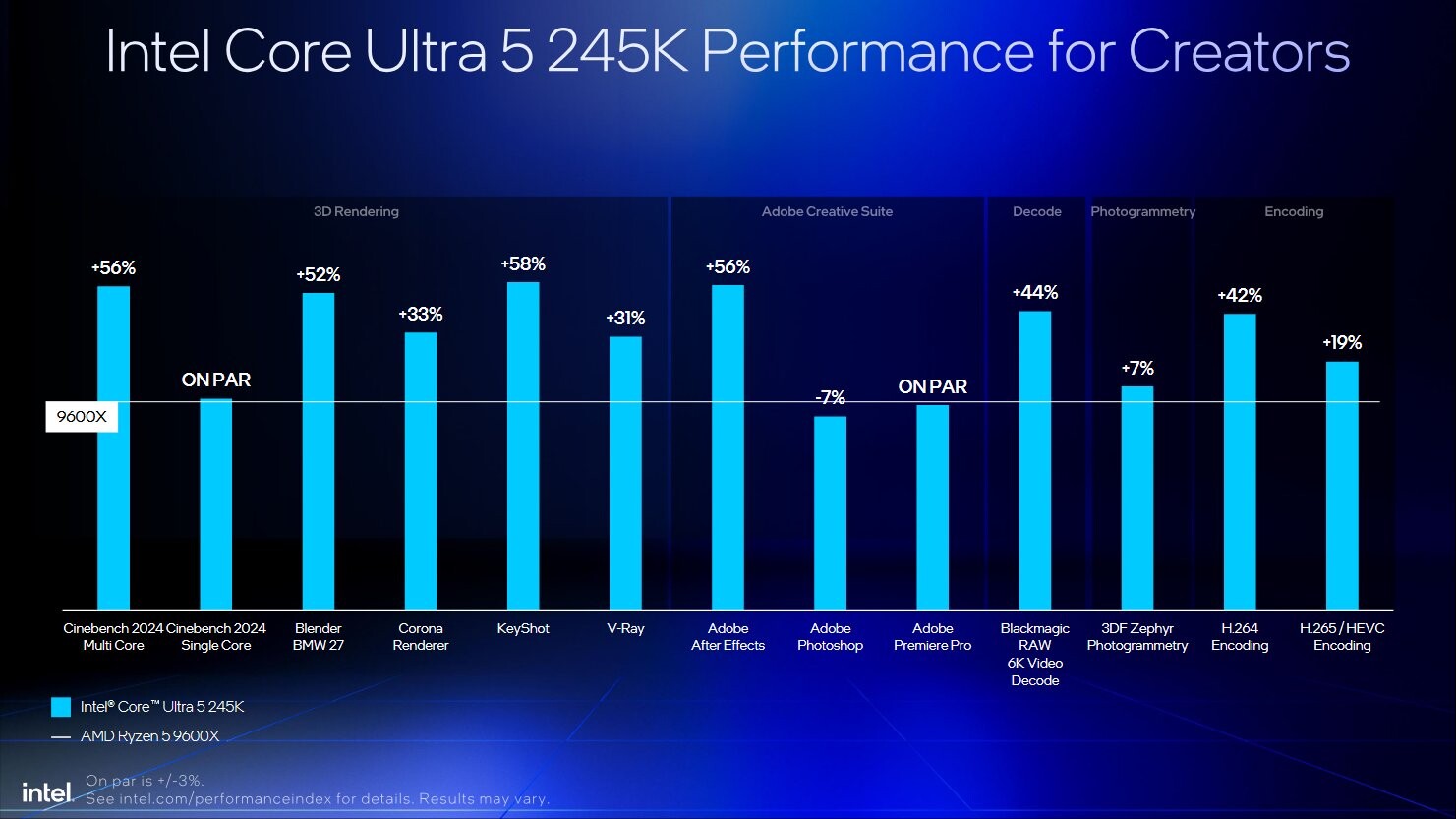
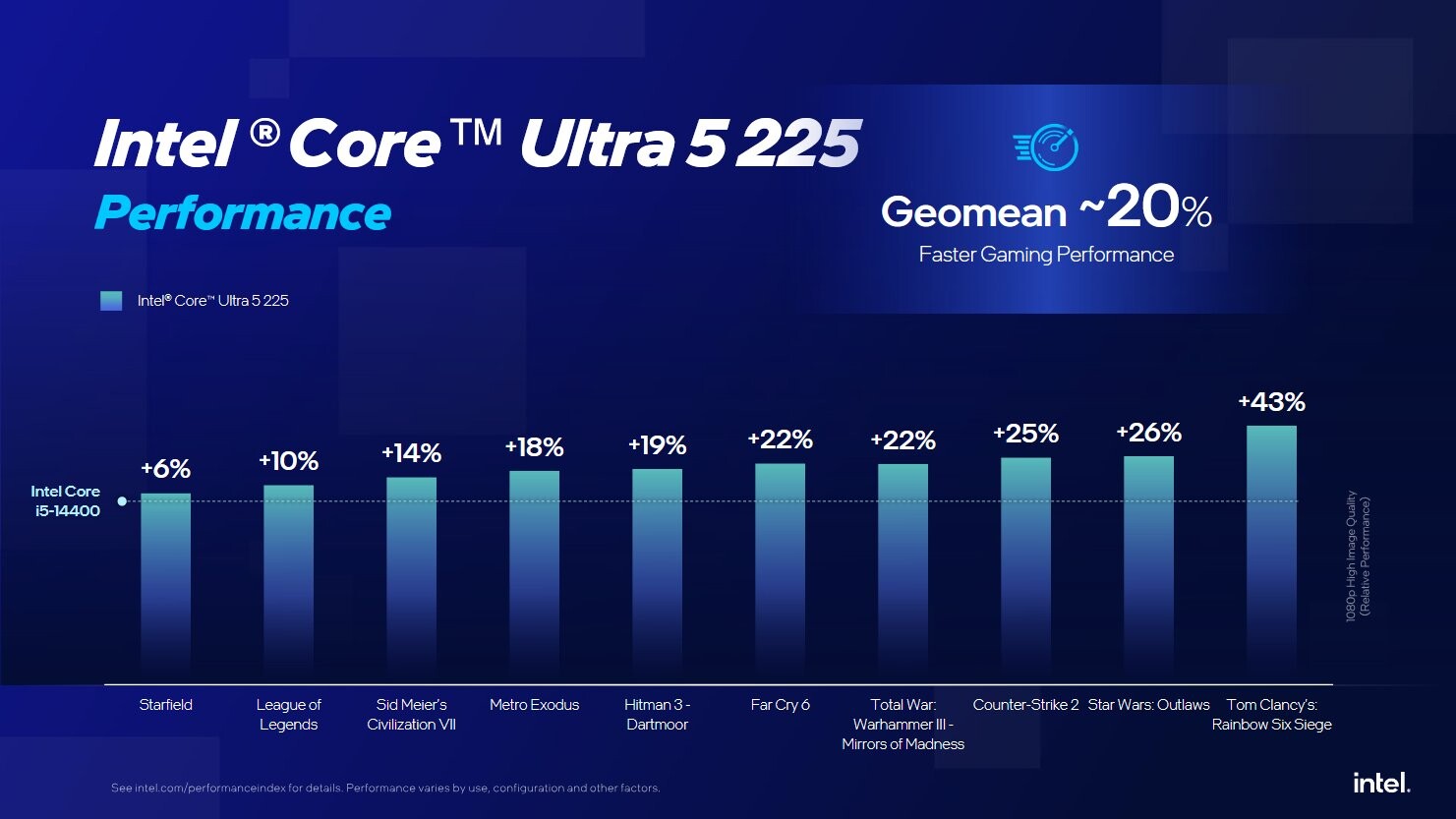
The Core Ultra 5 245K delivers mixed gaming results against the Ryzen 5 9600X, trailing in three out of nine games, matching in three, and leading in the remaining three. In multithreaded productivity tasks, the 245K’s 6P+8E core configuration gives it a clear advantage, except in single-threaded benchmarks like Photoshop and Cinebench 2004 ST. Intel also compared the Core Ultra 5 225 to its predecessor, the Core i5-14400, reporting a 20% average improvement in gaming performance.
Key Performance Takeaways
- Intel’s Core Ultra 200-series processors offer competitive gaming performance, often trailing AMD’s X3D models by small margins but delivering strong productivity results.
- The latest software and microcode updates, including APO enhancements, have contributed to improved performance since launch.
- Intel’s pricing strategy positions its processors as strong value options, especially in productivity-focused scenarios.
- The Core Ultra 7 265K stands out for its multithreaded performance and value, particularly when compared to higher-priced AMD alternatives.
- The Core Ultra 5 series provides a balanced option for mainstream users, with notable gains in productivity workloads.